SMSC: a custom property platform with end to end lifecycle automation.
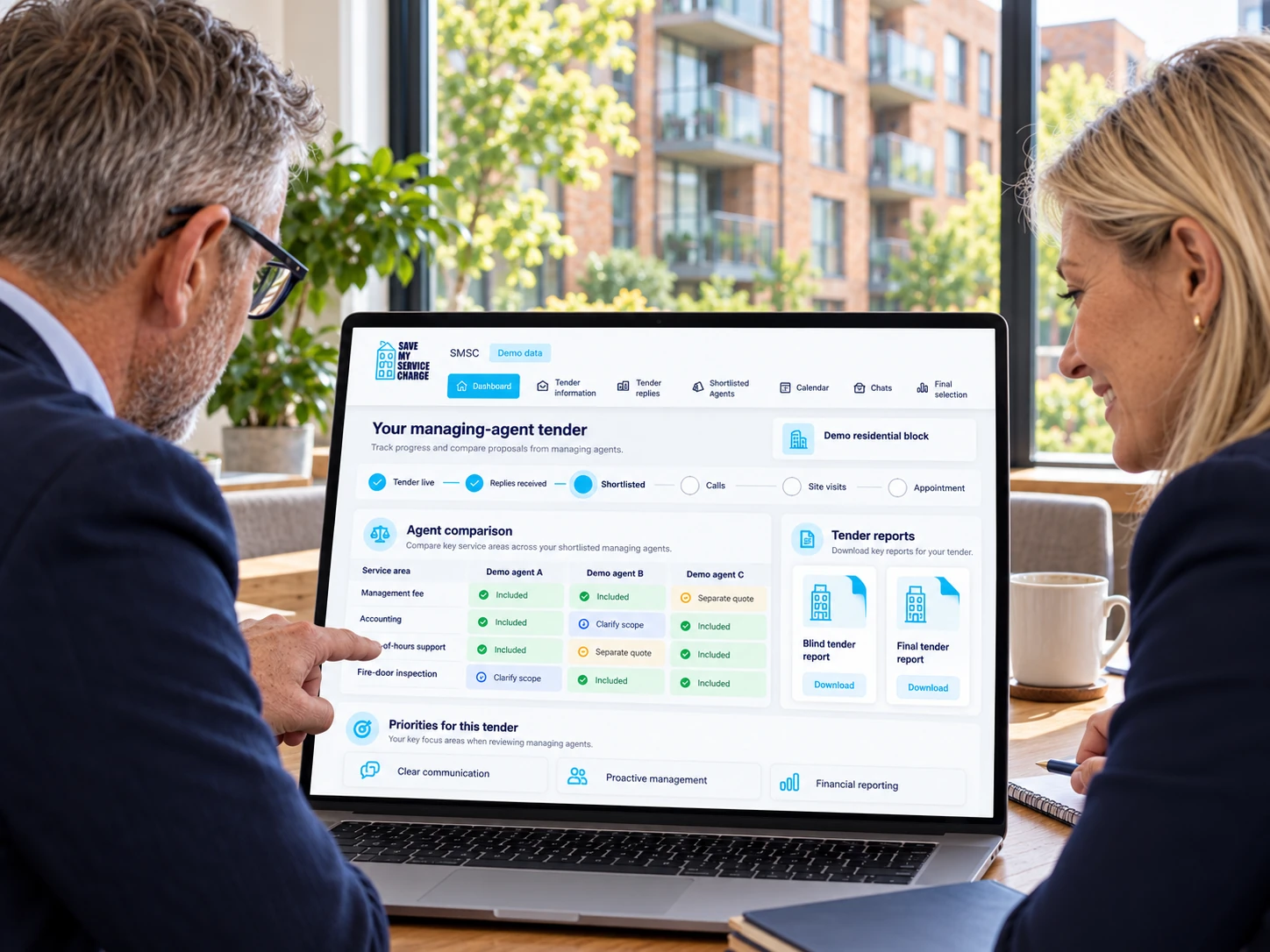
We built a custom platform that connects resident companies, managing agents and SMSC’s operations team. Onboarding, property requirements, proposals, meetings and agent selection follow one tender record. Automation handles routine updates, notifications, follow up and payment tracking throughout the journey.
- Client
- Save My Service Charge
- Sector
- Property services
- What we built
- A custom platform and end to end lifecycle automation
- Headline outcome
- A connected, automated 16-stage tender journey
Choosing an agent is a journey, not a quotation form.
Residents’ Management Companies need to describe the property, agree their priorities, verify directors and compare managing agents. A low fee is only one part of the decision: proposals, calls, site visits and evaluation feedback all have to stay connected.
Managing agents have a different job. They need reusable responses, branch responsibilities, fee breakdowns and a view of their opportunities. SMSC needed both experiences to feed one operational record, so stalled tenders and overdue payments could be followed up without rebuilding the history from inboxes and spreadsheets.
One platform. Automation across the whole journey.
Resident and managing agent portals
Dedicated experiences support property requirements, onboarding, director verification, agent profiles, branches and proposal preparation. Saved responses and tender specific drafts make the managing agent side useful for a team handling several opportunities.
A structured way to compare agents
Shortlists connect to video calls, site visits and tender linked messages. Residents can score agents against configurable, weighted criteria, record their feedback and produce printable evaluation sheets and final selection reports.
Connected records and automatic handoffs
Tenders, proposals, shortlists, appointments, invoices and verification records remain linked. Customer activity automatically updates the operational view and triggers the relevant notifications and follow up, so the team can act with the full tender history.
Follow up that knows the stage
A 16-stage resident company journey tracks tender progress. At Risk reasons flag where intervention is needed; pause controls retain the tender context and schedule its next follow up. A separate payment workflow tracks invoices from provisional and issued through overdue and paid.
Automation that follows the actual state of the work.
One consistent tender record
Centralised stage transitions keep the customer journey, operational records and automation aligned. Every next step starts from the current state of the tender.
Reliable events and updates
Queued events, retries and verified administrative updates keep records connected. Repeated events update the existing record rather than creating a separate customer history.
Continuity when a connection fails
The platform preserves customer actions when a connected service is unavailable. Controlled rollout lets the team introduce automation in stages without interrupting the tender journey.
Built around the same tender lifecycle.
The platform brings resident, managing agent and operations workflows together. Automation carries the routine updates and follow up between stages, while residents retain agent selection and the team handles cases needing intervention.
- 01
Organise the journey
Connect registration, requirements, proposals, shortlisting and selection around a common tender record.
- 02
Automate the handoffs
Link customer activity to stage changes, operational updates, notifications and targeted follow up.
- 03
Connect the payment lifecycle
Bring paused tenders, intervention reasons and invoice states into the same operational view.
The next step stays attached to the tender.
stages connected across the resident company journey
linked operational record types
event types supporting automatic updates and follow up
These figures describe the implemented platform and automation scope. The project did not supply a measured reduction in handling time or an increase in conversion.
A few useful
questions.
What does the platform automate?
Customer activity triggers record updates, stage changes, notifications and follow up. The workflows also identify stalled tenders, schedule follow up for paused journeys and track the invoice payment lifecycle.
How do people stay involved?
Residents compare and select managing agents. Managing agents prepare proposals and attend meetings. The operations team has a shared view of exceptions, verification and cases requiring intervention; automation handles the routine coordination around those decisions.
Which customer journey still needs your team to join the dots?
From the first proof to a working implementation. We’ll explore the workflow, the systems involved and a practical first build.