Dwyer Enterprises: a lead engine that qualifies before it spends and keeps people in control.
We built a custom sourcing and reply triage system for Dwyer’s multi client outbound operation. It finds the right business owners, qualifies brands before paying for enrichment, and turns campaign replies into a follow up queue the team can review and correct.
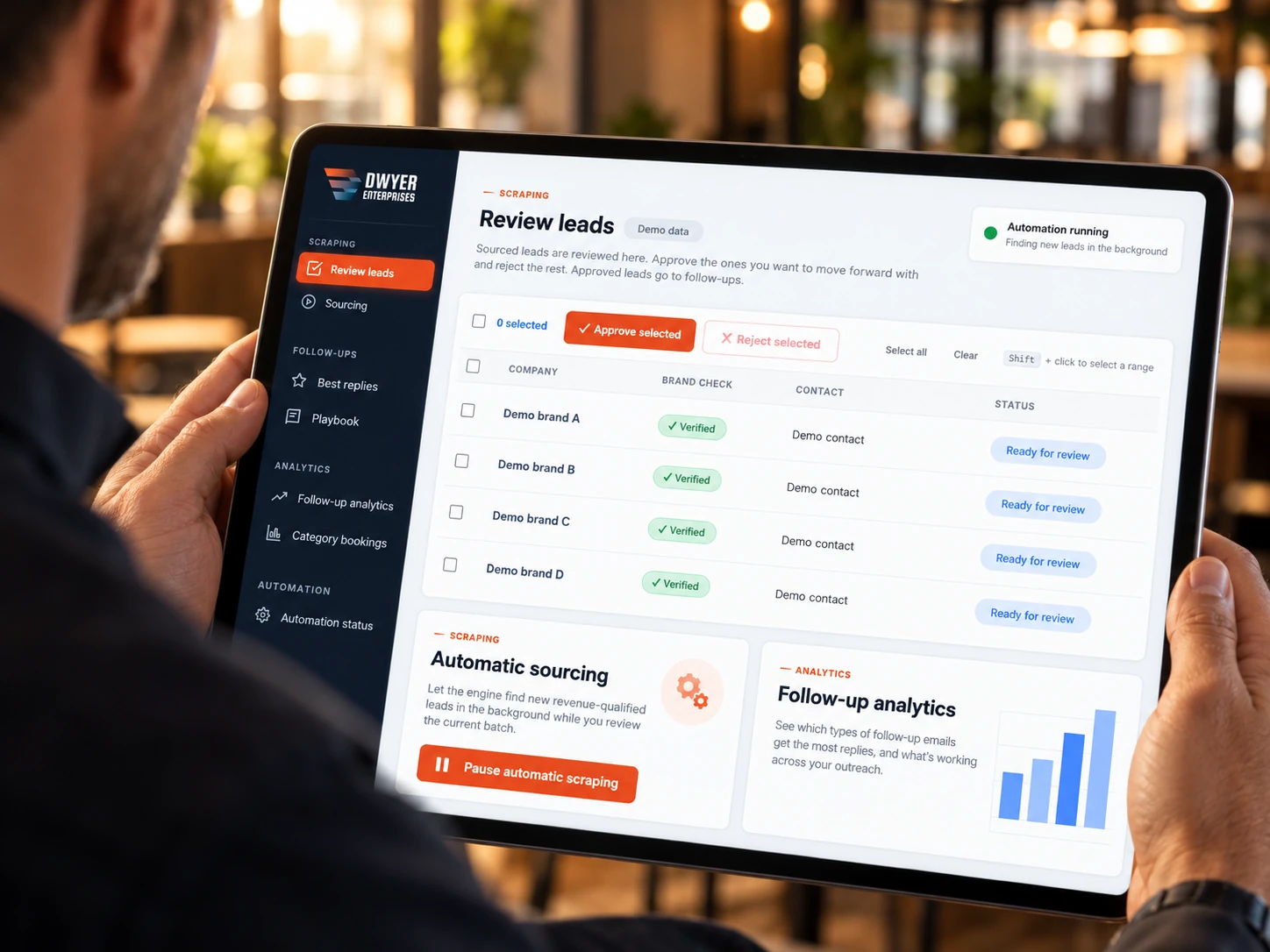
- Client
- Dwyer Enterprises
- Sector
- B2B growth services
- What we built
- A custom AI lead sourcing and reply triage system
- Headline outcome
- 68.5% lower enrichment cost per accepted lead
One reviewer could not keep every campaign supplied.
Dwyer sells Amazon growth services to owners of US ecommerce brands. Across multiple clients and campaigns, the operation depended on fresh decision maker lists and a reliable view of which replies needed follow up. Sourcing took one reviewer around three weeks per drop; replies were read and classified by hand.
The waste started before outreach. Paid enrichment reached duplicate or unsuitable records, and loose company name matching attached large brand revenue to unrelated businesses. Calendar confirmations could be filed as “other”, leaving the team with a booking count it could not trust.
Two pipelines. One usable operating view.
Qualification before paid enrichment
We built a brand to domain to person to email pipeline, matching each provider to the job it does well. Category checks, duplicate checks, brand verification and revenue qualification run before the expensive steps. A failed provider call goes to review instead of becoming a guessed result.
AI reply triage with protected human decisions
Received emails are cleaned and batched into Claude for classification against 11 defined outcomes. The system rolls those replies into one headline status per lead. A confirmed booking can promote that status; automation cannot demote it or overwrite a manual correction.
A queue the operations team can run
Sourcing produces reviewable batches, and NocoDB gives non technical staff an up to date view of lead status and next actions. Decision maker deduplication removes repeated rows without destroying the underlying records.
The expensive mistakes needed explicit controls.
Credit limits and caching
Paid runs reserve and cap credits. Cached revenue checks avoid repeat spending, while timed out provider calls are quarantined rather than retried blindly.
Stricter company matching
Revenue matching uses explicit similarity checks and large brand exclusions, preventing a familiar name from importing the wrong company’s numbers.
Reviewable failures
Provider failures and ambiguous classifications remain visible. The team can correct the record without that correction disappearing in the next scheduled run.
Fix the economics, then make the workflow dependable.
We worked from the live sourcing process, campaign history and the team’s reporting problems. Each change had to improve the queue without hiding uncertainty.
- 01
Trace the waste
Audit rejected enrichments, duplicate records, revenue matches and booking status rules.
- 02
Reorder and test
Move cheap qualification ahead of paid checks and compare the old and new paths on matched lead segments.
- 03
Connect daily operations
Run sourcing and reply classification on a schedule, with a shared review queue and protected manual overrides.
Less enrichment waste. A clearer queue.
lower enrichment credits per accepted lead: 11.6 to 3.65
paid lead acceptance in the matched comparison
replies automatically classified into 11 outcomes
The cost and acceptance results come from a matched A/B comparison of worst case or stale lead segments, not a claim of the same saving across every campaign. Booking status fixes improved visibility of existing meetings; they do not represent additional meetings generated.
A few useful
questions.
What makes this more than a lead list?
The delivery connects qualification, paid enrichment, reply interpretation and human review. The operations team can see the status of the work and correct it in the same process.
Where does a person stay involved?
People approve leads, handle uncertain cases and retain control of manual corrections and booking status. Automation prepares and organises the work around those decisions.
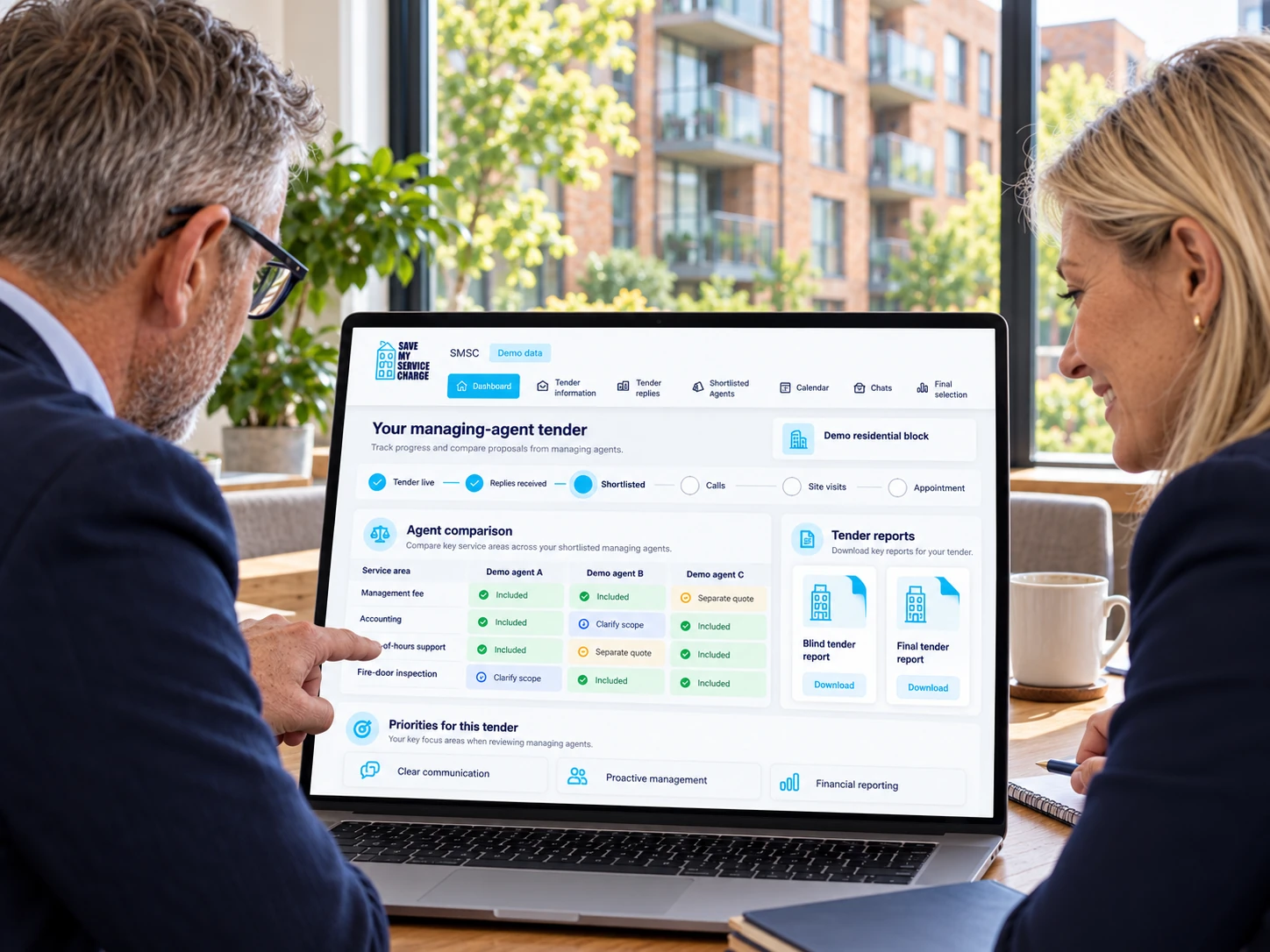
A custom property platform connecting onboarding, tender selection, follow up and payments.
Read the case study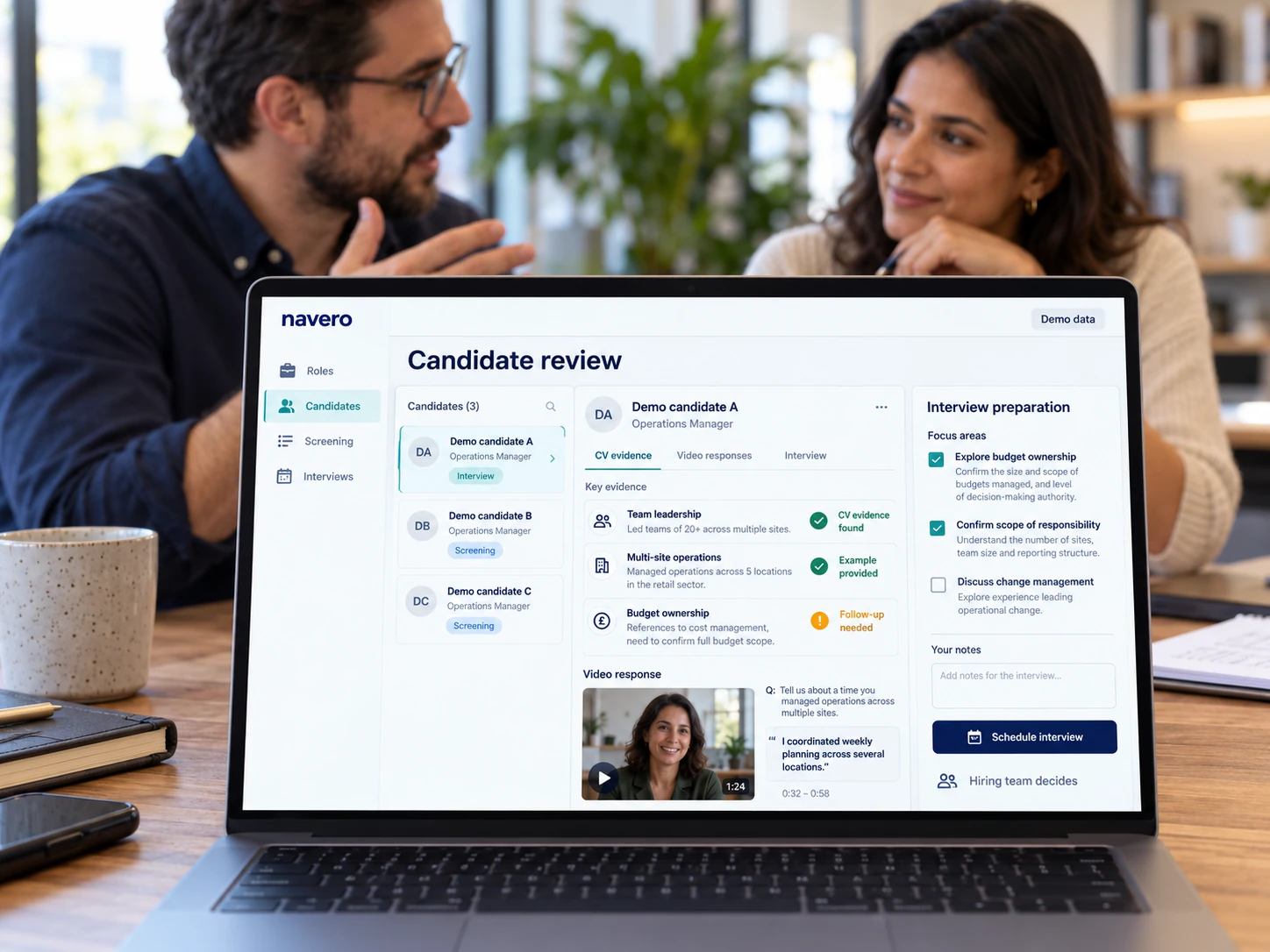
Implementing AI screening and automated recruiter workflows from application to interview.
Read the case studyWhere is your team paying for work it later has to discard?
From the first proof to a working implementation. We’ll explore the workflow, the systems involved and a practical first build.